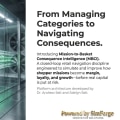
In today's rapidly evolving retail landscape, Market Scenario Simulations have emerged as a crucial tool for businesses looking to navigate the complexities of consumer behavior and market dynamics. At the forefront of this innovation is Aegis SimForge, a pioneering platform that leverages synthetic foresight to pressure test various business strategies and surface potential failures before they occur. By integrating advanced methodologies such as Category Management, Shopper Mission analysis, and Basket Economics, Aegis SimForge enables retailers and suppliers to understand not just what shoppers buy, but why they buy it, and how those decisions impact the bottom line. The importance of accurately simulating market scenarios cannot be overstated. With the ability to visualize different outcomes based on shifting demand, competitor actions, and changing shopper behaviors, retailers can proactively adjust their strategies to enhance loyalty, minimize leakage, and maximize margin.
As the retail environment becomes increasingly complex, tools like Aegis SimForge provide a closed-loop calibration system that ensures historical data informs future predictions, allowing businesses to make informed decisions with confidence. This article will delve deeper into the world of Market Scenario Simulations within retail intelligence. We will explore how these simulations function, their applications in various retail contexts, and the transformative impact they can have on decision-making processes. Join us as we unravel the intricacies of this innovative approach and its vital role in shaping the future of retail strategy.
Market scenario simulations
play a crucial role in the realm of advanced retail intelligence, providing retailers with the ability to predict and understand shopper behavior before making critical business decisions. Aegis SimForge is at the forefront of this innovation, dedicated to transforming shopper missions into actionable insights through its sophisticated Mission-to-Basket Consequence Intelligence system. play a crucial role in the realm of advanced retail intelligence, providing retailers with the ability to predict and understand shopper behavior before making critical business decisions. Aegis SimForge is at the forefront of this innovation, dedicated to transforming shopper missions into actionable insights through its sophisticated Mission-to-Basket Consequence Intelligence system.By integrating various components such as category management, shopper missions, basket economics, and category intelligence, Aegis SimForge enables retailers to navigate the complexities of consumer behavior and market dynamics effectively. At the heart of market scenario simulations lies category management, which involves the strategic organization and oversight of product categories to maximize sales and profitability. Retailers leverage category management to identify key trends, optimize product placement, and develop promotional strategies that resonate with consumer preferences. This approach is complemented by an understanding of shopper missions, which elucidates the reasons why consumers enter a store or visit an online platform. By analyzing these missions—whether they are driven by specific needs, impulse purchases, or brand loyalty—retailers can tailor their offerings to align with shopper intentions. Another integral component of these simulations is basket economics, which focuses on the value shoppers assemble during their purchasing journeys.
This includes understanding factors such as average basket size, product selection, and price sensitivity. By utilizing simulations, retailers can forecast how changes in pricing, promotions, or product availability will impact overall basket value and consumer behavior. Furthermore, category intelligence aids in tracking shifts in demand, competitive actions, channel performance, and emerging signals from shopper behavior. This multifaceted approach ensures that retailers can anticipate market changes and adapt their strategies accordingly. The interaction of these elements is central to Aegis SimForge's Mission-to-Basket Consequence Intelligence system.
This closed-loop framework not only allows retailers to simulate potential outcomes based on various shopper missions but also provides insights into how these missions convert into tangible results such as increased margins or customer loyalty. For example, by using market scenario simulations, a retailer might discover that modifying a specific product's placement results in a significant increase in basket size for shoppers on a particular mission. To execute these simulations effectively, various methodologies and technologies are employed in retail simulations. One notable approach is synthetic shopper wind-tunneling, a technique that allows retailers to model different scenarios and assess potential outcomes without risking actual inventory or customer experience. This method enables businesses to explore alternative futures by tweaking variables such as pricing strategies or promotional offers to see how they might influence shopper behavior. Another important methodology is closed-loop calibration, which involves correcting forward-looking predictions using historical data as a benchmark.
This process ensures that the simulations are grounded in reality and enhances the accuracy of forecasts by continuously aligning them with actual market performance. Together, these methodologies create a robust framework for understanding and predicting shopper behavior. However, implementing these advanced tools and methodologies does come with challenges. Retailers may face obstacles such as data integration issues, resistance to change within organizational culture, or a lack of expertise in executing complex simulations. To overcome these challenges, it is essential for retailers to adopt best practices such as investing in staff training, ensuring seamless data integration across systems, and fostering a culture of innovation that embraces data-driven decision-making. In conclusion, market scenario simulations serve as a powerful tool for retailers aiming to enhance their understanding of shopper behavior and improve business outcomes.
By leveraging the capabilities of Aegis SimForge's Mission-to-Basket Consequence Intelligence system alongside methodologies like synthetic shopper wind-tunneling and closed-loop calibration, retailers can navigate the complexities of today's retail landscape with confidence and precision.
Utilizing Category Intelligence
Category intelligence plays a crucial role in shaping effective market scenario simulations by providing valuable insights into consumer behavior, demand fluctuations, and competitive dynamics. By harnessing the power of data analytics, Aegis SimForge enables retailers to detect shifts in these areas, creating a framework where informed decisions can be made proactively rather than reactively. As retailers strive to understand the complexities of the marketplace, category intelligence becomes a vital tool. It identifies changes in consumer preferences and purchasing patterns, allowing businesses to anticipate demand before it peaks or declines. This foresight is essential for optimizing inventory levels, managing pricing strategies, and enhancing overall customer satisfaction. Moreover, the integration of competitive insights within category intelligence helps retailers benchmark their performance against competitors.By understanding how competitors are performing in similar categories, retailers can adjust their strategies to maintain or gain market share. Aegis SimForge’s simulations utilize this data to model various scenarios, enabling retailers to visualize potential outcomes and refine their approaches accordingly. In conclusion, category intelligence serves as the backbone of effective market scenario simulations. By providing a comprehensive understanding of demand shifts, competitive landscapes, and evolving consumer behavior, retailers can leverage these insights to drive strategic decisions that enhance profitability and foster long-term growth.
Analyzing Basket Economics
Basket economics is a crucial aspect of retail intelligence that focuses on the value and composition of the items that shoppers place in their baskets. As retailers strive to understand and predict shopping patterns, the integration of market scenario simulations becomes increasingly important.Aegis SimForge plays a pivotal role in this context by providing advanced tools that help retailers analyze these economic dynamics effectively. By transforming complex shopper missions into actionable insights, Aegis SimForge enables businesses to anticipate how different factors influence what customers choose to buy. The concept of basket economics revolves around understanding not just what items are being purchased, but also the relationships between those items and the overall value they represent. This analysis allows retailers to identify trends, optimize pricing strategies, and enhance product assortments. By leveraging simulations, businesses can test various scenarios to see how changes in pricing, promotions, or product placement might impact consumer behavior and basket value. In the realm of retail scenario simulation, insights derived from basket economics can significantly inform strategic decisions.
For instance, if a retailer identifies that specific product combinations lead to higher basket values, they can tailor marketing strategies to promote those combinations more effectively. Additionally, understanding the economic implications of shopper behavior helps retailers allocate resources more efficiently, ultimately driving profitability and customer satisfaction. Aegis SimForge’s approach enhances the understanding of these dynamics by integrating data from various sources, enabling a comprehensive view of basket economics. This allows for closed-loop calibration, where historical data informs predictive models, ensuring that retail strategies are grounded in reality while still exploring new possibilities for growth.
Technologies Behind Market Scenario Simulations
Aegis SimForge leverages a variety of advanced technologies and methodologies to enable effective market scenario simulations in the retail sector. By integrating multiple components, Aegis SimForge creates a comprehensive framework that allows retailers to visualize potential outcomes of various strategies and decisions. At the core of this simulation process is Synthetic Shopper Wind-Tunneling, which enables the modeling of different shopper behaviors and responses to various market conditions.This technology allows retailers to simulate alternative futures, providing insights into how changes in marketing, pricing, or product placement could impact shopper missions and ultimately, basket economics. Additionally, the integration of Category Management and Category Intelligence is critical. These methodologies help retailers understand not just the products they offer, but also how demand is shifting in response to competitor actions and market signals. By analyzing these dynamics, Aegis SimForge helps retailers anticipate changes in shopper behavior, allowing them to make proactive adjustments. Moreover, Closed-Loop Calibration plays a significant role in refining these simulations. By using historical data to correct and validate forward-looking predictions, retailers can achieve greater accuracy in their scenario simulations.
This iterative process ensures that assumptions are continuously tested against real-world outcomes, leading to improved decision-making capabilities. In summary, the technologies behind market scenario simulations at Aegis SimForge combine predictive analytics with real-time data integration. This sophisticated approach enables retailers to navigate complex market environments with confidence, turning insights into actionable strategies that enhance both customer experience and business performance.
Understanding Shopper Missions
In the realm of retail intelligence, shopper missions play a pivotal role in shaping effective retail strategies. Aegis SimForge is at the forefront of this transformation, utilizing advanced simulations to decode the complexities of shopper behavior. By understanding why shoppers enter a store—whether it’s for a specific product, browsing for ideas, or fulfilling a spontaneous desire—retailers can tailor their strategies to meet these diverse needs.Each shopper mission represents not just a potential sale, but an opportunity to enhance the overall shopping experience. The significance of shopper missions extends far beyond mere transactions. They influence everything from product placement and inventory management to promotional strategies and customer engagement tactics. When retailers grasp the nuances of these missions, they can better forecast demand and optimize their offerings accordingly. This understanding is where simulations become invaluable. Through the use of market scenario simulations, retailers can explore various shopper missions and predict how different factors might affect shopper behavior.
For instance, Aegis SimForge allows businesses to create synthetic shopper profiles and simulate their interactions within a store environment. This capability enables retailers to visualize potential outcomes based on different strategies, helping them make data-driven decisions that enhance shopper satisfaction while maximizing revenue. Ultimately, by operationalizing shopper missions within a closed-loop Mission-to-Basket Consequence Intelligence system, retailers can not only anticipate shopper needs but also adapt their business models proactively. This strategic approach ensures that retailers remain competitive in an ever-evolving marketplace.
The Role of Category Management in Simulations
Effective category management plays a crucial role in shaping the outcomes of market scenario simulations, particularly within the realm of retail intelligence. By leveraging tools like Aegis SimForge, retailers can gain invaluable insights into how different category strategies impact shopper behavior and, ultimately, business performance.Understanding the dynamics of category management allows retailers to create more accurate simulations that reflect potential market scenarios, which in turn helps in making informed decisions about product placement, pricing, and promotional strategies. When category management is executed effectively, it provides a framework for analyzing shopper missions and their corresponding behaviors within the retail environment. This analysis is essential because it informs the simulation models used by platforms such as Aegis SimForge. By integrating data on shopper preferences, competitive dynamics, and shifting demand signals, category management enhances the predictive accuracy of simulations. Retailers can simulate various scenarios—like introducing a new product or adjusting prices—to see how these changes might influence shopper decisions and overall sales. Moreover, the insights gained from effective category management enable retailers to navigate potential consequences before making strategic decisions.
For instance, understanding how a particular category's performance might be affected by external factors—such as economic shifts or emerging consumer trends—allows businesses to anticipate challenges and adjust their strategies accordingly. In this way, category management not only informs simulation outcomes but also actively shapes the trajectory of shopper behavior, leading to improved margin and loyalty outcomes. In conclusion, the integration of robust category management with market scenario simulations offers retailers a powerful approach to understanding and influencing shopper behavior. By utilizing tools like Aegis SimForge, retailers can ensure they are not just reacting to market changes but proactively shaping their strategies to drive better business results. In conclusion, the utilization of market scenario simulations in retail presents a multitude of benefits that can significantly enhance decision-making processes and drive improved business outcomes. By leveraging Aegis SimForge's innovative approach, retailers can gain deeper insights into shopper behavior and effectively navigate the complexities of market dynamics.
These advanced tools empower retailers to simulate various scenarios, allowing them to anticipate challenges and capitalize on opportunities before making critical decisions. Integrating market scenario simulations into retail strategies is not just a forward-thinking approach; it is essential for staying competitive in today's fast-paced market environment. Retailers are encouraged to embrace these technologies to better understand shopper missions, optimize basket economics, and enhance overall category management. With Aegis SimForge leading the way, the future of retail intelligence is bright, paving the path for increased loyalty, reduced leakage, and sustainable growth.