In today's rapidly evolving retail landscape, the ability to simulate various scenarios and outcomes is crucial for success.
Aegis SimForge
stands at the forefront of this evolution, offering a sophisticated platform designed to pressure test business strategies and reveal potential failures before they occur. This innovative tool enables retailers to enhance their understanding of shopper behavior, optimize category management, and ultimately improve their bottom line. By integrating advanced technologies like stands at the forefront of this evolution, offering a sophisticated platform designed to pressure test business strategies and reveal potential failures before they occur. This innovative tool enables retailers to enhance their understanding of shopper behavior, optimize category management, and ultimately improve their bottom line. By integrating advanced technologies like Category Management, Shopper Mission, and Basket Economics, Aegis SimForge equips businesses with the insights needed to navigate the complexities of retail. The significance of simulation software in retail cannot be understated.As competition intensifies and consumer preferences shift, retailers must leverage every advantage to stay ahead. Simulation software provides a unique foresight capability, allowing businesses to visualize potential future scenarios and make informed decisions that can lead to increased loyalty, reduced leakage, and enhanced margins. This article delves into the various popular software solutions for retail simulation, highlighting their functionalities and applications while emphasizing how tools like Aegis SimForge are redefining industry standards. Understanding shopper behavior is crucial for retailers striving to enhance their business outcomes. With the constantly evolving retail landscape, businesses must adapt to the intricate patterns of consumer decision-making.
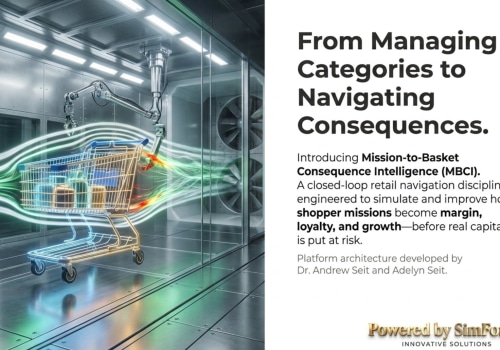
This is where retail simulation software like Aegis SimForge plays a pivotal role. By utilizing advanced simulation techniques, retailers can gain insights into how various factors influence shopper behavior, enabling them to make informed decisions that optimize customer experiences and drive sales. Retail simulation serves as a powerful tool for facilitating better decision-making by allowing retailers to visualize potential outcomes before implementing strategies. One notable methodology within this domain is Mission-to-Basket Consequence Intelligence. This approach provides a framework for understanding how shopper missions evolve into actual purchases, offering insights into margins, loyalty, and potential losses.
By simulating different scenarios, retailers can foresee the consequences of their actions, ensuring that they choose the most effective strategies for driving growth. Among the popular software solutions available, Aegis SimForge stands out with its comprehensive features designed to enhance category intelligence. The platform integrates key aspects of retail management, including category management, shopper mission, and basket economics. Its innovative feature, synthetic shopper wind-tunneling, allows retailers to test various market conditions and consumer responses without the risks associated with real-world implementation. This capability not only aids in strategic planning but also helps retailers anticipate shifts in demand and optimize their inventory management accordingly. Aegis SimForge's ability to perform closed-loop calibration sets it apart from conventional retail software.
By aligning historical data with forward-looking predictions, retailers can refine their strategies based on actual shopper behavior and market dynamics. This closed-loop feedback mechanism enhances the accuracy of simulations, leading to more effective decision-making processes. The benefits of employing such advanced tools extend beyond immediate sales increases; they help improve overall basket economics. By understanding how different factors contribute to basket value, retailers can implement targeted promotions and product placements that resonate with consumer preferences. This not only drives sales but also fosters customer loyalty by creating a more personalized shopping experience. Despite the clear advantages, some retailers may harbor misconceptions about retail simulation software.
One common objection is the belief that these tools are only necessary for large enterprises with significant budgets. In reality, even small to mid-sized retailers can benefit from the insights provided by simulation software. Another misconception is that retail simulation is overly complex and requires extensive training. However, platforms like Aegis SimForge are designed with user-friendly interfaces that simplify the integration of simulation into everyday operations. In conclusion, embracing retail simulation through advanced software solutions like Aegis SimForge can significantly enhance category intelligence and improve business outcomes.
By leveraging methodologies such as Mission-to-Basket Consequence Intelligence, retailers can navigate complex retail environments more effectively, ultimately driving growth and reducing losses.
Understanding Retail Simulation Software
Retail simulation software is a sophisticated tool designed to model and analyze shopper behavior within retail environments. Its primary purpose is to optimize various aspects of the retail experience, from product placement to inventory management, allowing businesses to make informed decisions that enhance customer satisfaction and drive sales. Aegis SimForge stands out as a leading solution in this domain, offering a comprehensive platform that integrates critical components of retail intelligence. The significance of retail simulation software lies in its ability to create realistic scenarios that mimic actual shopping behaviors and market conditions. By utilizing predictive analytics and synthetic populations, these tools help retailers understand how different factors influence consumer decisions.For example, Aegis SimForge employs a closed-loop Mission-to-Basket Consequence Intelligence framework, which not only simulates shopper missions but also provides insights into how these missions translate into tangible outcomes like loyalty, margin, and potential losses. Furthermore, retail simulation software facilitates a proactive approach to decision-making. Rather than reacting to market changes after they occur, retailers can use these simulations to anticipate shifts in demand or customer preferences. This foresight allows for strategic planning and timely interventions, ultimately leading to improved business outcomes. In this context, Aegis SimForge serves as an invaluable asset for retailers looking to navigate complex environments effectively.
Key Features of Effective Retail Simulation Tools
When it comes to enhancing retail outcomes, Aegis SimForge stands out as a premier solution that integrates various critical features essential for effective retail simulation.One of the standout features is synthetic shopper wind-tunneling, which allows retailers to simulate different shopper behaviors and scenarios. This capability enables businesses to visualize how potential changes in their environment could affect shopper decisions and ultimately impact sales. By modeling various future scenarios, retailers can make informed decisions that align with consumer expectations. Another important feature is category management. This aspect helps retailers and suppliers optimize their product categories, ensuring that they meet consumer demands while maximizing profitability.
By analyzing how categories perform under different conditions, retailers can adjust their strategies to improve shelf space utilization and product placements. The concept of closed-loop calibration is equally vital in effective retail simulation tools. This process involves using historical data to refine predictions about future retail performance. By continually comparing actual outcomes with forecasts, retailers can adjust their strategies in real-time, ensuring that they remain agile and responsive to market shifts. Together, these features exemplify how Aegis SimForge provides a comprehensive approach to retail simulation, empowering businesses to navigate complex environments with confidence and precision.
Case Studies of Successful Implementations
Aegis SimForge has been instrumental for numerous retailers seeking to optimize their operations through advanced simulation techniques. One notable case is a large grocery chain that implemented this software to enhance its category management strategy.By utilizing the synthetic shopper wind-tunneling feature, the retailer was able to simulate various shopper scenarios and understand how different merchandising strategies would impact basket economics. This led to data-driven decisions that improved customer satisfaction and increased sales by effectively aligning product placement with actual shopper missions. Another example involves a fashion retailer that faced challenges in managing seasonal inventory fluctuations. By employing Aegis SimForge, the company could analyze past performance data and simulate future demand based on changing shopper behaviors and market trends. The closed-loop calibration feature allowed them to adjust their inventory strategies proactively, reducing excess stock while ensuring that popular items were always available.
As a result, the retailer saw a significant decrease in markdowns and an overall improvement in profit margins. A third case highlights an electronics retailer that sought to improve its loyalty program effectiveness. By integrating Aegis SimForge into their analytics, they were able to simulate the impact of various promotional strategies on customer loyalty and retention. This enabled them to tailor their offers based on specific shopper missions, leading to a more personalized shopping experience. Consequently, the retailer experienced an increase in repeat purchases and enhanced brand loyalty among its customer base.
Future Trends in Retail Simulation Technology
The landscape of retail simulation technology is evolving rapidly, driven by advancements in artificial intelligence, machine learning, and data analytics.As retailers seek to enhance their decision-making processes and improve shopper engagement, solutions like Aegis SimForge are at the forefront of these innovations. By integrating various aspects of retail intelligence, Aegis SimForge enables businesses to navigate complex environments and optimize outcomes through predictive modeling and scenario analysis. One of the most significant trends is the increasing use of real-time data analysis. Retailers are now able to capture and analyze shopper behaviors as they happen, allowing for immediate adjustments to marketing strategies and inventory management. This real-time feedback loop enhances the simulation process by providing more accurate representations of shopper interactions and potential market shifts. Another emerging trend is the integration of augmented reality (AR) and virtual reality (VR) technologies into retail simulations.
These immersive experiences allow retailers to visualize and test different store layouts, product placements, and promotional strategies in a simulated environment before implementation. This not only reduces risk but also enhances customer experience by aligning store designs with shopper expectations. Furthermore, the rise of cloud computing is making advanced simulation tools more accessible to retailers of all sizes. With cloud-based platforms, businesses can leverage sophisticated simulation capabilities without the need for significant upfront investments in infrastructure. Aegis SimForge exemplifies this trend by offering a comprehensive platform that combines synthetic populations and predictive modules, making it easier for retailers to adopt advanced simulation techniques. Lastly, the concept of collaborative simulations is gaining traction.
Retailers are increasingly working together with suppliers and other stakeholders to create shared simulations that reflect collective insights into market dynamics. By collaborating on simulations, businesses can develop more robust strategies that account for broader industry trends and challenges. In conclusion, as the retail sector continues to embrace technological advancements, tools like Aegis SimForge will play a crucial role in shaping the future of retail simulation. By staying ahead of these trends, retailers can optimize their operations and drive better business outcomes. In conclusion, leveraging advanced retail simulation software like Aegis SimForge is essential for retailers aiming to optimize shopping experiences and enhance overall business performance. By utilizing cutting-edge tools that integrate various facets of retail intelligence, businesses can navigate complex environments with confidence.
Retail simulation software not only allows for the understanding of shopper behavior but also equips retailers with the foresight needed to make informed decisions that drive success. As we look to the future, the role of such simulation technologies will undoubtedly grow, enabling retailers to stay ahead of market trends and consumer expectations. The integration of features like category management, shopper mission analysis, and synthetic shopper wind-tunneling found in Aegis SimForge exemplifies how these tools can significantly impact retail outcomes, ensuring that businesses are well-prepared to tackle any challenges that arise.