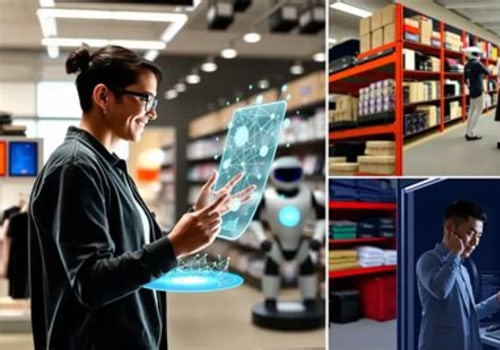
In the rapidly evolving world of retail, the integration of Category ManagementCategory Management and Intelligence Strategies has become a cornerstone for success. As retailers strive to understand the complex dynamics of shopper behavior and market trends, leveraging advanced tools like Aegis SimForge can provide a significant competitive edge. This revolutionary platform offers a unique approach to retail intelligence, enabling businesses to simulate various scenarios and assess potential outcomes before making critical decisions. By blending the principles of category management with sophisticated intelligence strategies, retailers can effectively navigate the intricacies of consumer demand, channel shifts, and competitive actions. The convergence of these two disciplines not only enhances decision-making processes but also empowers businesses to optimize their operations in real-time.
In this article, we will explore how integrating category management with intelligence strategies can lead to improved margins, enhanced customer loyalty, and minimized losses, all while ensuring that retailers are well-equipped to adapt to the ever-changing marketplace. As we delve deeper into this topic, we will highlight the various components that comprise a successful integration strategy and illustrate how Aegis SimForge stands at the forefront of this transformation. Together, we will uncover practical insights that can help retailers harness the power of data-driven decision-making to drive sustainable growth and success. In the rapidly evolving retail landscape, integrating category management with intelligence strategies has become paramount for sustained success. Aegis SimForge serves as a pivotal tool in this integration, enabling retailers to transform shopper missions into actionable insights that drive profitability. Traditionally, category management has focused on critical elements such as product assortment, pricing, and promotions.
Retailers have employed these strategies to ensure they offer the right products at competitive prices while maximizing promotional effectiveness. However, as consumer behavior shifts and market dynamics evolve, there is an increasing need for advanced methodologies that go beyond traditional approaches.Category intelligenceCategory intelligence plays a crucial role in providing deeper insights into shopper behavior, demand fluctuations, and competitive dynamics. This approach moves retailers from merely managing categories to understanding the underlying factors that influence purchasing decisions. For instance, by analyzing data on shopper interactions and preferences, retailers can identify trends that inform product selection and inventory management.
Companies like Target and Walmart have adopted category intelligence frameworks to enhance their decision-making processes, leading to improved sales performance and customer satisfaction. The integration of these strategies is not without its challenges. Retailers may face difficulties in aligning their category management practices with intelligence-driven insights. For example, a retailer might struggle to reconcile historical sales data with real-time shopper behavior analytics. This is where data analytics and predictive modeling come into play.
Utilizing advanced tools like Aegis SimForge's Mission-to-Basket Consequence Intelligence, retailers can simulate various retail scenarios to anticipate outcomes based on different shopper missions. This capability allows retailers to visualize how changes in product assortment or pricing can impact overall performance before making decisions. For instance, consider a grocery chain that wants to launch a new organic product line. By using Aegis SimForge, they can model potential shopper responses based on past behavior and current market trends. This approach not only enhances their understanding of potential demand but also helps in optimizing marketing strategies tailored to specific shopper segments.
The ability to pressure-test business scenarios ensures that retailers can make informed decisions that lead to increased margin and reduced leakage. However, the merging of category management and intelligence strategies can present several challenges. Retailers may encounter resistance from teams accustomed to traditional methods or face difficulties in integrating disparate data sources. To overcome these hurdles, best practices include fostering a culture of collaboration between teams, investing in training for employees on new technologies, and ensuring that leadership supports this strategic shift. By embracing a closed-loop approach that incorporates feedback from both historical data and predictive insights, retailers can effectively navigate the complexities of modern retail. In conclusion, the integration of category management with intelligence strategies is essential for retailers aiming to thrive in today’s competitive environment.
With tools like Aegis SimForge facilitating this process, retailers can better understand shopper missions and optimize their operations accordingly. As the retail landscape continues to change, those who harness the power of these integrated strategies will be best positioned for success.
Case Studies of Successful Integration
In the competitive landscape of retail, integrating category management with intelligence strategies has proven to yield significant advantages. One notable example involves a leading grocery chain that harnessed Aegis SimForge to enhance its category management processes. By utilizing the platform's synthetic shopper wind-tunneling capabilities, the retailer was able to simulate various shopper missions and their corresponding impacts on basket economics.This allowed them to anticipate consumer behavior and adjust their product placements and promotions accordingly, resulting in a measurable increase in sales and customer loyalty. Another compelling case comes from an electronics retailer that faced declining margins amid fierce competition. By adopting Aegis SimForge, they effectively integrated category intelligence into their decision-making processes. The platform provided insights into shifting demand patterns and competitor actions, enabling the retailer to optimize their inventory management. As a result, they not only reduced excess stock but also enhanced their ability to respond to real-time market changes, leading to improved profitability and market share. Additionally, a fashion retailer leveraged the integration of category management and intelligence strategies through Aegis SimForge to enhance their promotional strategies.
By analyzing shopper missions and basket value trends, they identified key periods for sales promotions that aligned with consumer purchasing behavior. This strategic alignment resulted in increased engagement during promotional events and a higher conversion rate, demonstrating the effectiveness of combining these methodologies.
Understanding Category Management
Category management is a retail strategy that focuses on managing product categories as individual business units. The core principle lies in understanding the distinct needs of shoppers and aligning the right products to meet those needs effectively. This approach enhances the overall shopping experience, leading to increased customer satisfaction and loyalty.In this context, tools like Aegis SimForge become essential, as they provide retailers with the ability to transform shopper missions into actionable insights, facilitating informed decision-making. The significance of category management in retail cannot be overstated. It allows retailers to optimize product assortments, pricing strategies, and promotional activities based on comprehensive data analysis. By viewing categories through the lens of shopper behavior, retailers can identify trends, manage stock levels efficiently, and respond proactively to market changes. This not only increases operational efficiency but also maximizes sales potential. Furthermore, effective category management fosters collaboration between retailers and suppliers.
By sharing insights derived from shopper missions and basket economics, both parties can develop strategies that drive mutual growth. The integration of category management with intelligence strategies creates a robust framework for navigating the complexities of the retail landscape. Ultimately, leveraging advanced methodologies such as those offered by Aegis SimForge allows retailers to anticipate shopper needs and adapt their strategies accordingly. This proactive approach is essential for staying competitive in an ever-evolving market.
The Role of Category Intelligence
Category intelligence is an essential component in the modern retail landscape, serving as the backbone for informed decision-making. It encompasses the collection and analysis of data related to consumer behavior, market trends, competitive positioning, and channel dynamics.By leveraging Aegis SimForge, retailers can synthesize this information into actionable insights that directly influence their category management strategies. At its core, category intelligence allows retailers to understand the shifting demands of consumers and adjust their strategies accordingly. It identifies patterns in shopper missions—why customers enter a store or visit a website—and translates these insights into effective category management. This proactive approach not only helps in optimizing product assortments but also enhances the overall shopper experience, leading to increased sales and customer loyalty. Furthermore, category intelligence utilizes advanced analytical methods to simulate various market scenarios. Through tools like Aegis SimForge, retailers can engage in synthetic shopper wind-tunneling, predicting how changes in strategy may affect shopper behavior and basket composition.
This capability to forecast outcomes enables retailers to navigate potential challenges before they arise, ensuring they remain competitive in an ever-evolving marketplace. Ultimately, the integration of category intelligence into retail operations transforms how businesses approach decision-making. Instead of relying solely on historical data, retailers are empowered to make informed choices based on predictive analytics and real-time insights. By embracing category intelligence, businesses can enhance their agility and responsiveness, leading to improved outcomes across all areas of operation.
Integrating Strategies for Improved Outcomes
To effectively combine category management with intelligence strategies, retailers must first recognize the transformative potential of tools like Aegis SimForge. This platform is designed to integrate various facets of retail operations, including understanding shopper missions, evaluating basket economics, and analyzing shifting market dynamics.By leveraging the capabilities of Aegis SimForge, retailers can create a cohesive strategy that not only manages categories effectively but also anticipates consumer behavior and market trends. One of the key strategies in this integration is the establishment of a closed-loop system that connects historical data with predictive analytics. This means using past performance metrics to inform future decisions, thus allowing retailers to simulate different scenarios before implementing changes. Aegis SimForge excels in this area by providing a synthesized environment where potential outcomes can be tested against various shopper missions and market conditions. Moreover, integrating category intelligence involves continuously monitoring and analyzing how demand, competition, and consumer preferences evolve. Retailers should adopt advanced methodologies that allow them to capture these insights swiftly.
By doing so, they can adjust their category strategies in real-time, ensuring that they remain aligned with consumer expectations and marketplace shifts. Furthermore, it’s crucial for retailers to incorporate synthetic shopper wind-tunneling, a feature of Aegis SimForge that enables them to visualize and understand alternative futures. This proactive approach allows businesses to explore different strategies and their potential impacts on sales and customer loyalty before committing to any specific course of action. In summary, combining category management with intelligence strategies requires a robust framework that utilizes tools like Aegis SimForge to simulate outcomes, analyze trends, and make informed decisions. By embracing these advanced integration strategies, retailers can enhance their operational efficiency and drive better business outcomes.
Challenges and Solutions
Integrating category management with intelligence strategies is not without its hurdles. Retailers often encounter a variety of challenges that can hinder the effective utilization of tools like Aegis SimForge.One major challenge is the fragmentation of data sources. Retailers may have multiple systems in place, leading to inconsistencies and difficulties in obtaining a comprehensive view of shopper behavior and category performance. To address this, retailers should invest in a centralized data management system that consolidates all relevant data into one accessible platform. This integration allows for more accurate analysis and better decision-making based on a holistic understanding of shopper missions and basket economics. Another common challenge is resistance to change within organizations. Employees accustomed to traditional category management practices may be hesitant to adopt new intelligence strategies.
This resistance can stem from a lack of understanding of the benefits that these new methodologies can provide. To overcome this, it is crucial for retailers to implement training programs that educate staff on the advantages of integrating category management with intelligence strategies. Demonstrating how Aegis SimForge can transform shopper insights into actionable strategies will help foster a culture that embraces innovation. Finally, the complexity of interpreting advanced analytics can pose a significant barrier. Retailers may struggle with translating data insights into practical actions that drive results. Here, leveraging tools like Aegis SimForge can simplify the process by providing user-friendly interfaces and actionable insights derived from complex datasets. By presenting information in a clear, understandable manner, retailers can more easily implement data-driven decisions that enhance their overall strategy. In conclusion, integrating category management with intelligence strategies is crucial for retailers aiming to enhance their operational efficiency and customer satisfaction.
The discussion highlighted how tools like Aegis SimForge serve as a transformative asset in this integration process, enabling retailers to leverage actionable insights derived from shopper missions. As the retail landscape becomes increasingly complex, the adoption of advanced methodologies and technologies is no longer optional but necessary for staying competitive. The case studies presented further illustrated that successful integration leads to improved business outcomes, including increased margins, stronger customer loyalty, and reduced leakage. Despite the challenges that may arise during this integration, solutions are available that can streamline the process and ensure that retailers are well-equipped to navigate future uncertainties. Ultimately, the synergy between category management and intelligence strategies empowers retailers to make informed decisions that not only benefit their bottom line but also enhance the overall shopper experience. Embracing solutions like Aegis SimForge can provide the foresight needed to adapt and thrive in an ever-evolving market.